

Technical Support · Application Support · Implementation · Customer Engineering

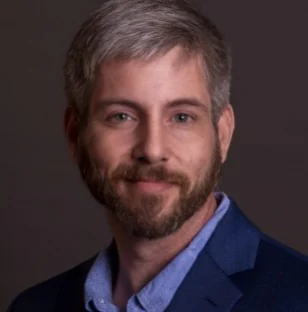
Joshua Jenks

Technical support and web operations across real production systems.

I’ve supported managed hosting and WordPress at Liquid Web, moved across very different client systems at Nolte, stepped into technical delivery at Fusionary, and owned global web operations at Crown Bioscience. I’m strongest in the work between a customer report and the technical teams, platforms, and vendors needed to resolve it.

Michigan / Remote

Joshua Jenks

Career progression

  1. 2013–17Liquid WebSupport depth
  2. 2018–20Nolte / Nolte CareRange and client ownership
  3. 2021FusionaryDelivery and stakeholder ownership
  4. 2022–24Crown BioscienceIndependent operational ownership

The environments changed. The responsibility kept growing.

From managed hosting support to multi-client operations, technical delivery, and global web ownership, each role added a different kind of technical and customer responsibility.

Support depth

Managed hosting support where one customer issue could cross WordPress, Linux, DNS, SSL, databases, or the control panel.

At Liquid Web I worked Tier II–III production issues, helped support the Managed WordPress offering, and combined technical diagnosis with direct customer ownership. This is where hosting, application behavior, and support discipline became one job for me.

Support systems
Zendesk · Salesforce
Hosting administration
cPanel · WHM · Plesk
Application environment
WordPress · Managed WordPress
Systems
Linux · PHP · Apache / NGINX · MySQL · DNS / SSL

Read Liquid Web →

Range and client ownership

Support and delivery across client systems that could involve WordPress, React, React Native, payments, CRM, or a completely different business model.

I led support operations and technical escalations across a varied client portfolio. The work meant getting useful quickly inside unfamiliar systems, coordinating developers and vendors, and keeping the client informed when the technical boundary moved.

Web / application
WordPress · React · React Native
Operations
HubSpot · Jira Service Desk
Integrations
Payment processors
Client contexts
Nonprofit · Real estate · Investing / financial · Ecommerce

Selected client environments

  • Women's Forum of New YorkNonprofit digital systems
  • MotaMeetClient application
  • LVLYClient application
  • Tough Mudder BootcampFitness client platform
  • Modern Spaces NYCReal-estate web platform
  • Be The Match MéxicoNonprofit digital systems
  • Lovejoy WharfClient web platform
  • RabbleworksClient application

Read Nolte / Nolte Care →

Delivery and stakeholder ownership

WordPress and application delivery work that expanded into technical project coordination and direct conversations with senior client stakeholders.

At Fusionary I diagnosed production issues, wrote and clarified work for engineering and QA, and stepped into technical delivery responsibilities. I contributed to the Detroit Axle rebuild and worked directly with the CTO of Jet's Pizza.

Platforms
WordPress · Craft CMS · Custom CMS
Delivery
Technical project coordination · QA handoffs · Functional specifications
Integration work
APIs · Forms · Analytics

Selected engagements

Read Fusionary →

Independent operational ownership

Independent ownership of global web operations across HubSpot CMS, analytics and tagging, search, integrations, hosting, and vendors.

At Crown Bioscience I owned day-to-day technical website operations across multiple global properties. The stack included HubSpot CMS, Google Analytics/GA4, Google Tag Manager, search and analytics workflows, plus a custom Elasticsearch-driven search experience.

Platform
HubSpot · HubSpot CMS
Measurement
Google Analytics / GA4 · Google Tag Manager · Google Search Console · Google Ads
Search
Elasticsearch
Operations
Global digital properties · Vendors · Backups / security

Read Crown Bioscience →

Turn the customer report into something testable.

This is the practical loop I use when the symptom could belong to the browser, application, runtime, data, hosting layer, integration, or vendor.

Illustrative trace — the order changes with the problem.

Report Something expected did not happen.
Browser Application / CMS Runtime Data Hosting / platform DNS / TLS API / integration Vendor
Orient

Get the scope before choosing a cause.

I want a reproducible symptom, affected users or systems, recent changes, and a clear idea of what still works.

Facts

Turn the report into things I can inspect.

Browser behavior, logs, request paths, state, timestamps, and downstream responses are more useful than a confident guess.

Narrow

Stop carrying explanations that no longer fit.

If the browser, application, or hosting layer cannot explain the symptom anymore, I take it out of the working set.

Test

Use the next check to change the shape of the problem.

A good diagnostic test should tell me which direction to go next, not simply produce another page of output.

Fix

Keep the change as small as the evidence allows.

Once the failure is isolated, I would rather make one defensible correction than bundle several hopeful ones together.

Verify

Make sure the original problem is actually gone.

I retest the symptom, confirm the downstream outcome, and capture anything that will make the next incident faster to diagnose.

The goal is a smaller problem, a defensible fix, and a result the customer can actually verify.

I still build because staying hands-on makes me better at support.

Independent projects keep me current with software, automation, AI-assisted engineering, and operational tooling by giving me new systems to build, operate, document, and troubleshoot.

SwitchyardElixir / Phoenix

Make webhook failures inspectable and recoverable.

A delivery system that preserves requests, routing, attempts, failure history, and replay so an integration incident can be diagnosed from evidence instead of reconstructed from memory.

Read project →Source ↗

macadminzsh / macOS

Put guardrails around administrative automation.

A macOS operations toolkit built around dry-run behavior, bounded paths, explicit authorization, structured output, and tests that do not use a real machine as the destructive fixture.

Read project →Source ↗

InvariantAI-assisted engineering

Require AI-assisted changes to show what actually happened.

A broader engineering system for making AI-assisted changes more accountable through reusable methods, bounded execution, recorded evidence, verification, and human acceptance.

Read project →

My career has been nonlinear, but the technical pattern is consistent.

I started in technology in 2000 as a systems analyst, moved through ISP and software support, then returned to deeper technical work in managed hosting, agency support, development, and global web operations. I did not take a perfectly straight path, but I kept gravitating toward work where someone needs a technical problem understood and carried through to resolution.

I like learning unfamiliar systems by using them, communicating clearly when the answer is still incomplete, and staying involved through verification instead of disappearing at the handoff. I’m also a dad, and that has made dependability and doing useful work matter more to me than having a perfectly tidy career story.

Selected career timeline

  1. Systems AnalystCASE Credit Union
  2. Technical SupportCoreComm
  3. Software SupportClinic Pro
  4. Managed HostingLiquid Web
  5. Support OperationsNolte
  6. Software DevelopmentFusionary
  7. Global Web OperationsCrown Bioscience
  8. Independent engineeringSwitchyard · Invariant · macadmin

If you need someone who can get useful quickly inside a technical customer problem, we should talk.

Technical support, application support, implementation, customer engineering, technical account work, and support-adjacent operations are the clearest fit.